
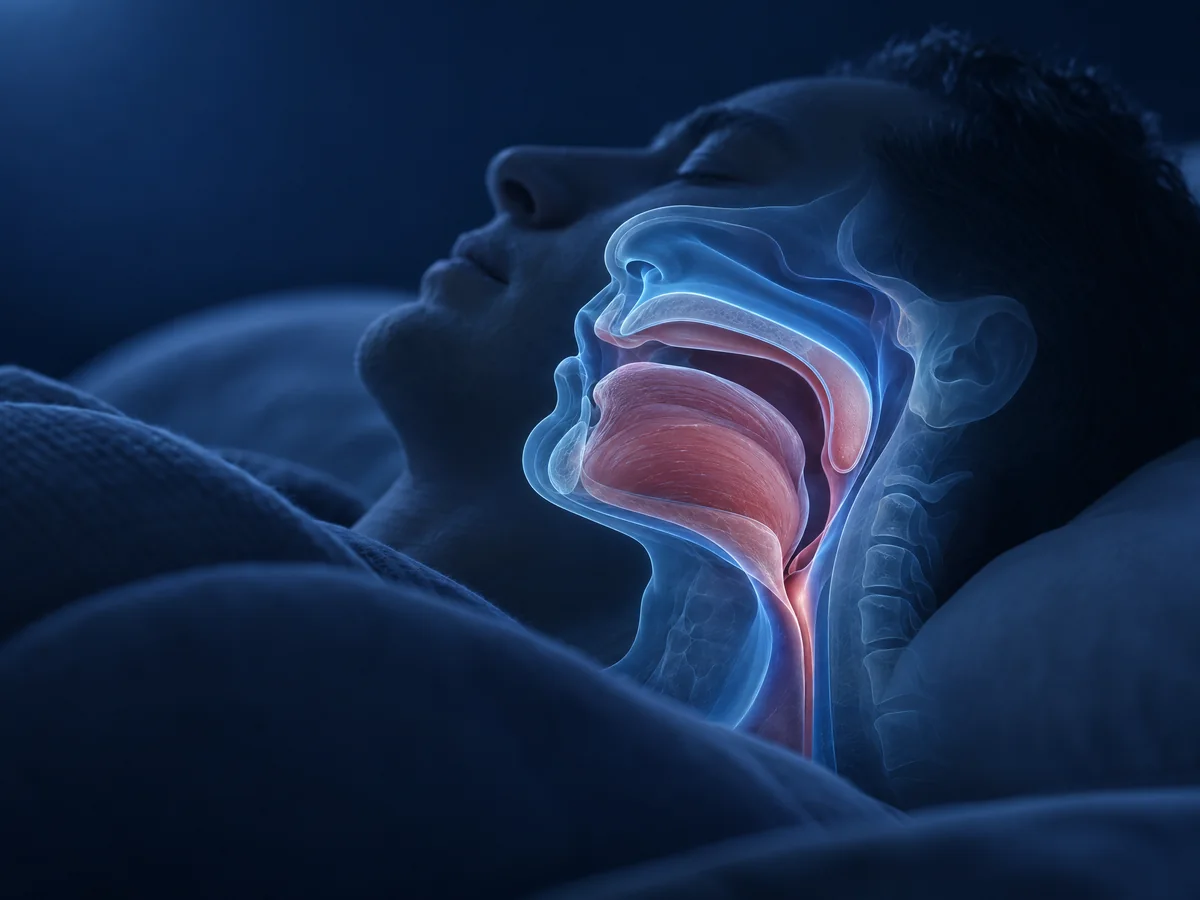
Obstructive sleep apnea (OSA) is a breathing disorder in which the throat repeatedly narrows or closes during sleep. These interruptions can fragment sleep and reduce oxygenation. Since many people do not notice what happens at night, recognizing signs and seeking assessment is more useful than trying to reach a diagnosis on your own. The SBPT explains this diagnostic process in detail.
Which symptoms deserve attention?
During the night
The best-known signs are loud, frequent snoring, pauses in breathing observed by another person, and episodes of choking or shortness of breath while sleeping. An account from someone who sleeps nearby is useful, because the person themselves may not notice the pauses. Snoring alone does not confirm OSA: not everyone who snores has apnea. See the list of symptoms from the NHLBI, an institute of the National Institutes of Health.
During the day
Excessive sleepiness, fatigue, difficulty maintaining attention or concentrating, and headache on waking are among the possible manifestations. Some people seek help because of insomnia or changes in daily functioning. The absence of obvious sleepiness does not rule out the problem: the severity and combination of symptoms vary.
How is the assessment carried out?
The consultation covers sleep schedules and quality, snoring, pauses in breathing, awakenings, sleepiness, medications and health conditions. The clinician may also perform a physical examination, assess factors that increase the likelihood of obstruction and consider other causes of fatigue. A sleep diary organizes information about sleep duration and sleepiness, but does not replace diagnostic testing. The NHLBI describes the clinical history, sleep diary and sleep study as parts of the diagnostic process.
Questionnaires, such as sleepiness scales, support screening, but do not confirm or rule out OSA on their own. The guideline from the American Academy of Sleep Medicine (AASM) recommends not using clinical tools to diagnose adults without polysomnography or home sleep apnea testing.
Polysomnography or home testing?
Polysomnography records breathing and other physiological signals during sleep; it is the standard test when there is clinical suspicion. In adults without significant complicating conditions and with signs of increased risk of moderate or severe OSA, the physician may consider technically adequate home testing with professional oversight. The choice depends on the clinical picture and the expected quality of the recording.
If the home test is negative, inconclusive or technically inadequate, the AASM recommends polysomnography. Polysomnography is also preferable from the outset in the presence of significant cardiorespiratory disease, suspected hypoventilation, neuromuscular disease, chronic opioid use, a history of stroke or severe insomnia. The indication should be individualized by a qualified professional.
Frequently asked questions
Does snoring mean apnea?
No. Snoring is a possible sign, but the diagnosis depends on clinical assessment and appropriate testing when indicated.
Does an online test confirm OSA?
No. Online questionnaires may suggest risk, but they do not replace a consultation or a sleep study.
Next step
Frequent snoring, observed pauses in breathing, nighttime choking or sleepiness that affects daily routines warrant a discussion with a healthcare professional. Seek an individual assessment if symptoms persist or there are associated clinical conditions. Do not use this text for self-diagnosis.
Sources consulted
- Sleep Apnea — Brazilian Society of Pulmonology and Phthisiology
- Sleep Apnea Symptoms — National Heart, Lung, and Blood Institute (NHLBI/NIH)
- Sleep Apnea Diagnosis — National Heart, Lung, and Blood Institute (NHLBI/NIH)
- Clinical Practice Guideline for Diagnostic Testing for Adult Obstructive Sleep Apnea — AASM
This content is educational and does not replace an individual medical assessment.