
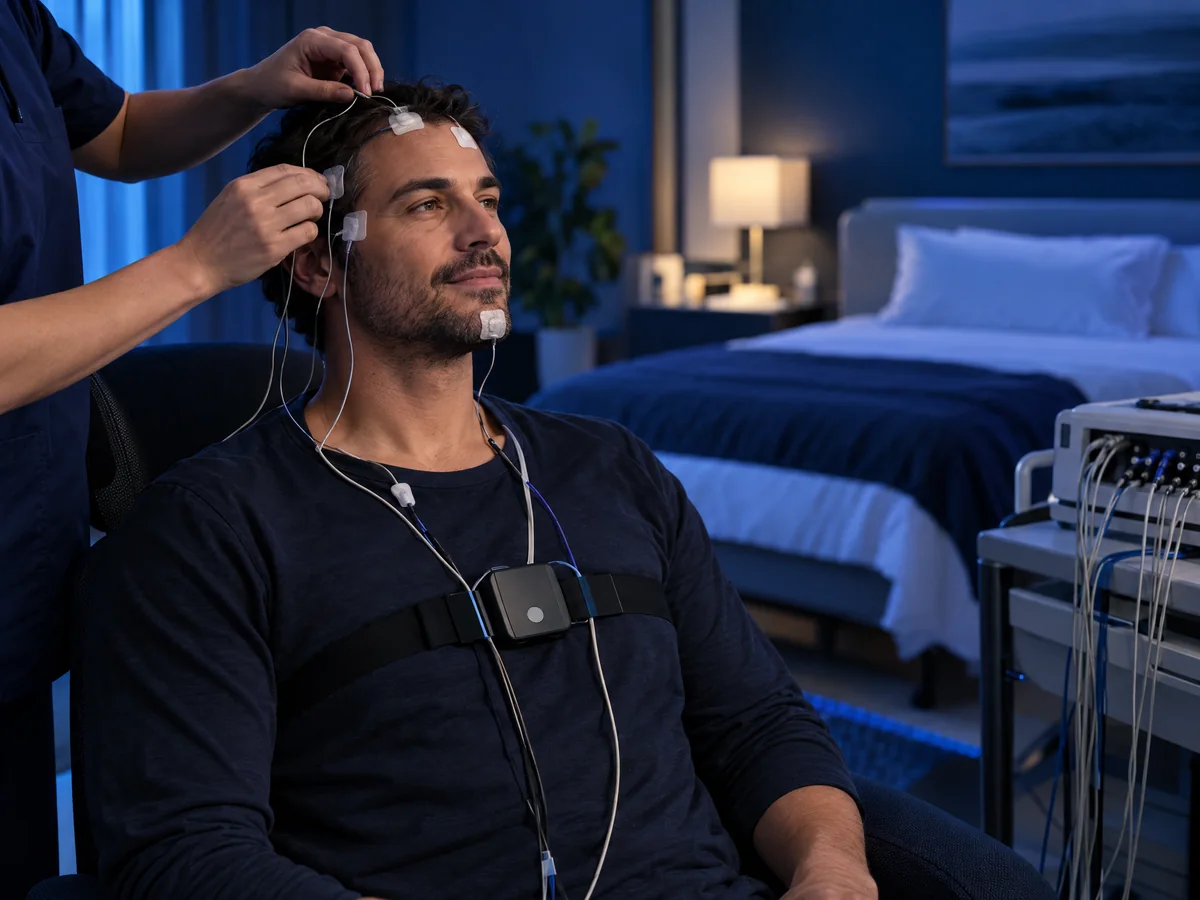
Polysomnography monitors bodily functions during sleep. Usually performed at night in a sleep laboratory, it helps investigate breathing pauses, snoring, abnormal movements, and other nighttime complaints. Understanding the steps and preparation may make the experience more comfortable, but whether the test is indicated depends on an individual clinical assessment.
What it is and how it works
The test is noninvasive. Sensors record brain waves, eye and leg movements, muscle activity, heart rate, respiratory effort and airflow, oxygen levels, body position, and sounds such as snoring. These measurements show sleep stages and possible abnormalities (NHLBI).
In the laboratory, a professional places electrodes on the scalp, face, chest, and legs, as well as a sensor on the finger or ear. The cables allow you to change position; the team monitors the signals using audio and video and can help if you need to get up. The setting is usually private and quiet. Sleeping differently than usual does not automatically invalidate the recording (Mayo Clinic).
Home sleep apnea testing is also available. It uses fewer sensors and mainly records breathing, heart rate, and oxygen levels; therefore, it does not replace polysomnography for investigating all sleep disorders. The choice depends on the history, clinical examination, and the condition suspected by the clinician. Questionnaires or online tests may raise suspicion, but they do not confirm a diagnosis or replace a consultation (AASM guideline).
When may it be indicated?
Testing may be considered when there is habitual snoring, observed breathing pauses, nighttime choking or gasping, daytime sleepiness, persistent insomnia, or abnormal behaviors and movements during sleep. It may also be part of an evaluation for suspected narcolepsy or other disorders. Polysomnography should be selected after a sleep assessment, and its result needs to be interpreted alongside symptoms and health history (AASM guideline).
How to prepare
The laboratory’s instructions take priority. In general, the recommendations are to:
- maintain your usual routine, avoiding afternoon naps;
- avoid alcohol and drinks or foods containing caffeine in the afternoon and evening;
- arrive with clean skin, without creams, oils, makeup, perfume, or hair gel;
- avoid nail polish or artificial nails when instructed by the facility, as they may interfere with the pulse oximeter;
- bring comfortable sleepwear;
- report medications and health conditions. Do not stop taking medications, especially sleep medications, without first discussing this with the professional responsible for your care (MedlinePlus).
For a home test, confirm how to place the sensors, start the device, and return it. If the result is negative, inconclusive, or technically inadequate, the team may recommend further evaluation, depending on the case.
FAQ
Does polysomnography hurt?
It does not usually hurt. Removing the adhesives may cause mild skin irritation, which is generally temporary.
Can I take the test at home?
In some adults with suspected uncomplicated obstructive sleep apnea, a home test may be an option. It does not investigate all disorders and should be guided by a qualified professional.
If you have loud snoring, noticed breathing pauses, unrefreshing sleep, or daytime sleepiness, seek an individual assessment. The indication, type of test, and interpretation should take each person’s symptoms and health into account.
Sources consulted
- National Heart, Lung, and Blood Institute — Sleep Studies
- Mayo Clinic — Polysomnography (sleep study)
- American Academy of Sleep Medicine — Clinical Practice Guideline for Diagnostic Testing for Adult Obstructive Sleep Apnea
- MedlinePlus — Sleep Study
This content is educational and does not replace an individual medical assessment.