
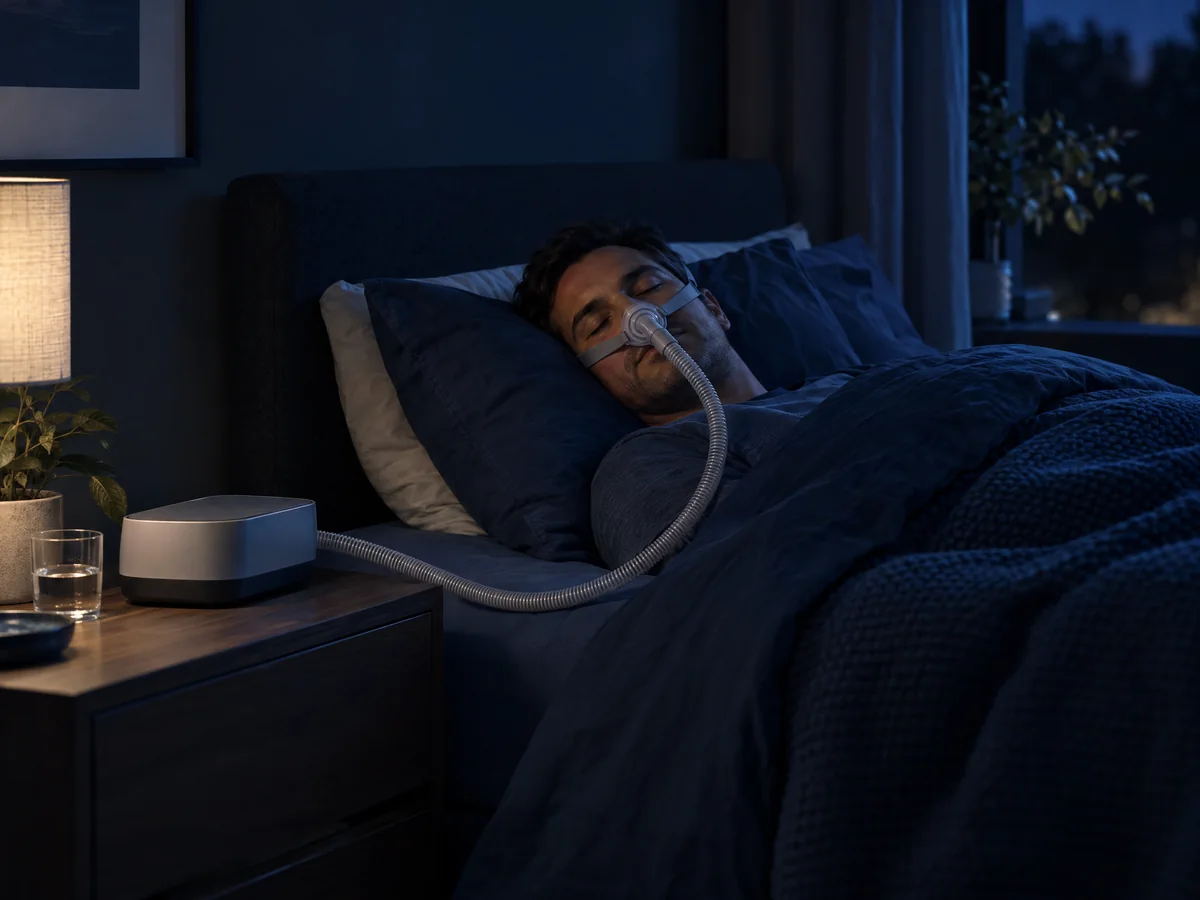
CPAP is a device that delivers pressurized air through a mask during sleep. This pressure helps keep the upper airway open and prevents the repeated narrowing characteristic of obstructive sleep apnea (OSA). Understanding how it works and how to adjust to it helps address difficulties safely, but treatment should begin after an appropriate evaluation and continue with individualized follow-up.
What is CPAP and how does it work?
The equipment generates a flow of air, carried through a tube to a nasal mask, an oronasal mask, or a nasal pillow interface. With CPAP, the pressure is continuous; other modes, such as APAP and BPAP, vary the pressure in different ways and should not be interchanged on your own. During use, pressurized air reduces throat collapse and helps air pass through. The device must be used as prescribed.
The American Academy of Sleep Medicine (AASM) recommends that PAP therapy be based on an objective diagnosis of OSA and that follow-up take place after treatment begins. The mode selected depends on each person’s diagnosis and health conditions.
Signs and evaluation before treatment
Habitual loud snoring, observed pauses in breathing, choking or gasping during the night, frequent awakenings, and daytime sleepiness are signs that warrant investigation. Difficulty concentrating and headaches upon waking may also occur, but no single symptom confirms sleep apnea.
The evaluation should combine a clinical history, an examination, and a sleep test. The AASM diagnostic guideline does not recommend diagnosing OSA using questionnaires or prediction tools alone: in adults without relevant complicating factors, polysomnography or a technically adequate home sleep apnea test may be indicated. If the home test is negative, inconclusive, or inadequate, polysomnography may be necessary. The choice of testing method depends on the clinical context; therefore, an online test does not replace a consultation.
How to make adjusting to CPAP easier
It is common for the mask to feel unfamiliar or uncomfortable at first. Practicing while awake for short periods, for example while reading, may help you become familiar with it. The mask should form a seal without being excessively tight; leaks, persistent marks, dry mouth or nose, congestion, a runny nose, and a sensation of excessive pressure warrant a review of the interface, humidification, or features such as the ramp by the professional overseeing the case. The American Thoracic Society recommends seeking help when problems prevent use, rather than abandoning treatment.
Do not change the pressure, switch modes, or stop CPAP on your own. If abdominal pain or significant distension occurs, the NHLBI advises stopping use and contacting a healthcare professional. Follow-up visits allow assessment of tolerance, symptoms, leaks, and response to treatment, as well as adjustments to the strategy when necessary.
Frequently asked questions
Is it normal for CPAP to feel unfamiliar?
Yes. Adjusting to it may require practice and adjustments. Persistent discomfort should not simply be endured: inform the care team so they can review the mask and settings.
Can I buy and adjust the device on my own?
No. Suspected OSA requires evaluation; pressure and mode should be determined and reassessed individually.
If snoring is accompanied by pauses in breathing, nighttime choking, or daytime sleepiness, seek a medical evaluation. Those who already use CPAP and cannot adjust to it should also seek follow-up, without changing treatment on their own.
Sources consulted
- AASM — Clinical Practice Guideline on PAP Therapy
- AASM — Clinical Practice Guideline for Diagnostic Testing for Adult Obstructive Sleep Apnea
- NHLBI — Sleep Apnea Treatment
- American Thoracic Society — PAP Therapy: Quick Tips for Troubleshooting
This content is educational and does not replace an individualized medical evaluation.