
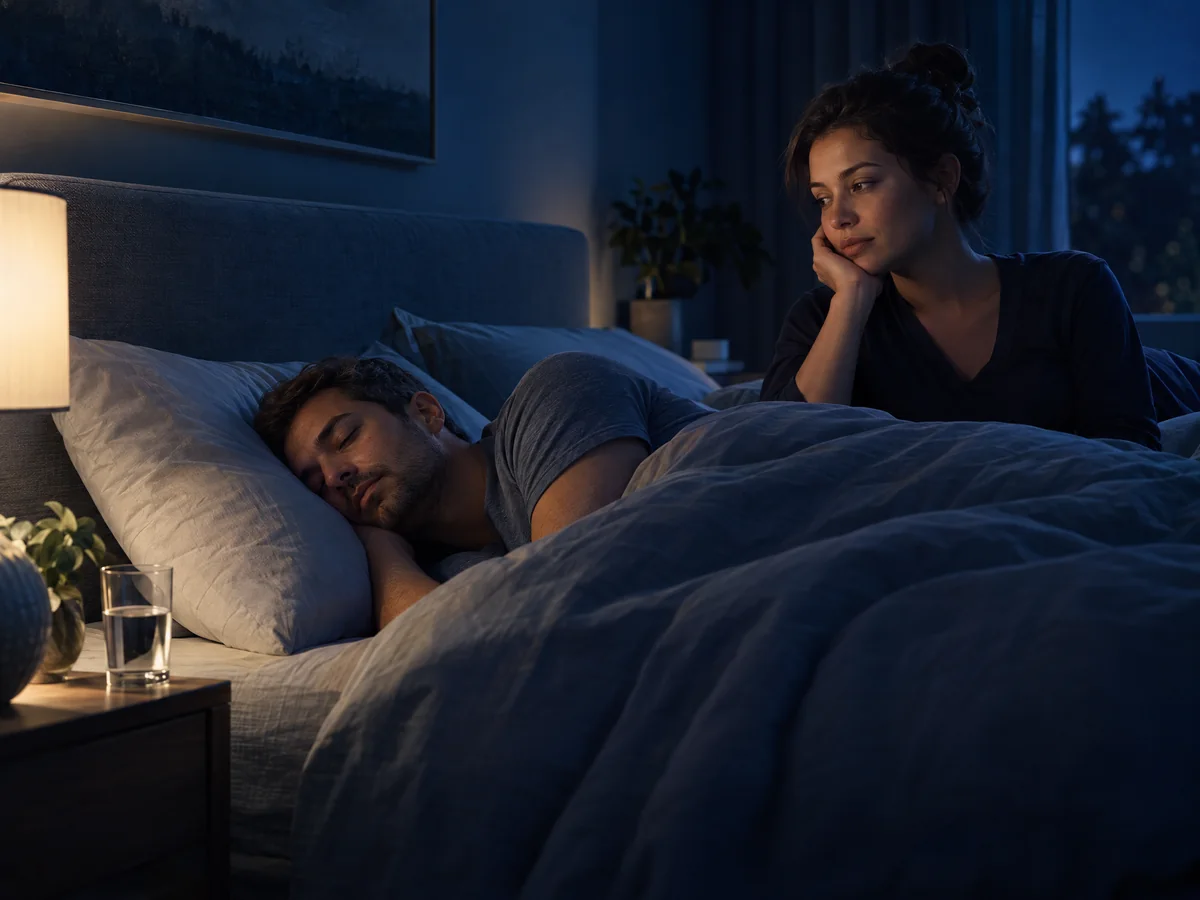
Occasional snoring is common, but frequent, loud snoring accompanied by pauses in breathing may be a sign of obstructive sleep apnea (OSA). In this condition, the upper airway repeatedly narrows or closes during sleep. Snoring alone, however, is not enough to conclude that sleep apnea is present: the evaluation should consider symptoms, medical history, and, when indicated, a sleep study.
Which signs deserve attention?
Reports from someone who sleeps nearby are often valuable, because the person may not notice changes during the night. The following warrant investigation:
- habitual, loud snoring;
- observed pauses in breathing, followed by a noisy resumption of breathing;
- choking, a feeling of suffocation, or gasping during the night;
- excessive sleepiness, fatigue, or difficulty concentrating during the day;
- unrefreshing sleep, headaches upon waking, dry mouth, or frequent awakenings to urinate.
These signs do not all have the same significance and may also occur with other problems. Even so, their combination makes it important to speak with a healthcare professional. The NHLBI symptoms page lists breathing pauses, loud and frequent snoring, and choking among the possible manifestations.
The American Academy of Sleep Medicine (AASM) guideline describes an increased risk of moderate to severe OSA when excessive daytime sleepiness is associated with at least two of the following: habitual loud snoring, witnessed apnea or choking, and previously diagnosed hypertension. This guides the evaluation; it is not a criterion for self-diagnosis. The AASM guideline also emphasizes that clinical tools alone do not confirm the disease.
How is the evaluation conducted?
The consultation should establish the sleep pattern, frequency of snoring, observed episodes, sleepiness, and health conditions. The physical examination may include an assessment of the upper airway and factors that increase suspicion. The Brazilian consensus on sleep-related breathing disorders emphasizes that no screening tool, on its own, confirms or rules out OSA.
When indicated, diagnosis is made through a sleep study. Polysomnography is the standard test; in uncomplicated adults, the physician may consider a technically adequate home sleep apnea test. If that test is negative, inconclusive, or inadequate, the AASM recommends polysomnography. The choice depends on the individual’s clinical presentation and the quality of the evaluation, not on an app or an online questionnaire.
FAQ
Does snoring always mean sleep apnea?
No. Primary snoring can occur without breathing pauses. Concern increases when snoring is habitual and accompanied by choking, observed pauses, or daytime effects.
When should you seek an evaluation?
When these signs recur, when sleepiness affects attention and safety, or when hypertension is present alongside snoring, it is worth seeking an individual evaluation. Sleepiness while driving requires caution: do not drive if you are sleepy.
Next step
Noting how often snoring occurs and asking a partner or family member about pauses and choking may help during the consultation, but does not replace a clinical examination. The healthcare professional will be able to decide whether investigation for OSA or another cause of unrefreshing sleep is necessary.
Sources consulted
- Sleep Apnea Symptoms — NHLBI
- Clinical Practice Guideline for Diagnostic Testing for Adult Obstructive Sleep Apnea — AASM
- Consensus on Sleep-Related Breathing Disorders — Brazilian Thoracic Association
This content is educational and does not replace an individual medical evaluation.